Contact Information
PNHP Minnesota
Website: http://www.pnhpminnesota.org
E-mail: pnhpminnesota@gmail.com
Video: There is a Better Way
Board of Directors
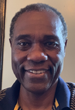 Nelson Adamson, MD
Dr. Nelson Adamson is happy to rejoin the PNHP-MN board. He hopes to contribute some perspective from his position as a practitioner currently working full time in a multi-specialty group located in central Minnesota.
As a radiation oncologist, he often witnesses the toxic effects of the financial burden brought onto patients by our dysfunctional sick care system.
Dr. Nelson has been married for 38 years, has 4 adult children, and a 2-year-old grandson. (He is proud that three of his children have pursued medical careers!) When not working, he spends time with his family, and enjoys recreational cycling and reading.
 Kari Carlson, MPH
Kari provided administrative support to PNHP-MN in 2017 and 2018, and has recently joined the organization as a board member. Kari recently graduated with her Master of Public Health degree focusing on Health Equity and Environmental Health, and is now working with a Federally Qualified Health Center serving the North/Northeast Minneapolis and surrounding communities.
Kari became drawn to the fight for equitable access to health care after experiencing and witnessing innumerable family and personal hardships for the sake of health care profits, and decided to add single-payer advocacy to her career pursuing health equity after hearing a PNHP speaker in 2013.
John Crosson, MD
Dr. John Crosson spent his entire medical career in hospitals devoted to delivering excellent medical care to the underserved, first at Minneapolis General Hospital (the MGH of the Midwest) and then eventually at HCMC. He trained initially as an internist then decided to become a pathologist. From the early 1970s to 2005 he worked at HCMC as a general pathologist. During this time he saw many patients who suffered greatly because they had inadequate insurance and could not afford to be seen in the health care system in a timely way. For over 25 years he has worked on getting universal health care available for all in the U.S. Currently he spends his time at the University of Minnesota teaching medical students and residents. He mentions the need to have single-payer health care to them every chance he gets.
 Beret Fitzgerald
Beret recently helped PNHP Minnesota with rural outreach and coordination, including visits to International Falls and Worthington to connect with health care providers. She is a second year medical student at the U. Writing about her rotation at International Falls, Beret “was impressed with the quality of care and resilience that this community has shown in its commitment to providing health care. I also heard at all levels – from administrators to patients, frustration with the health care system, costs, and accessibility of care.” Read her op-ed in the International Falls Journal here!
 Elizabeth Frost, MD
Dr. Elizabeth Frost is a family practice doctor working at the Hennepin County Medical Center in Minneapolis, Minnesota. After graduating from residency at the University of Minnesota, Elizabeth spent almost a year volunteering with Doctors for Global Health in Chiapas, Mexico. She currently works with a heavily Latino and mostly uninsured population in Minneapolis, and is confronted daily with economic barriers to basic care. She co-founded Physicians for a National Health Program – Minnesota along with Dr. Ann Settgast.
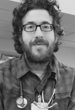
Brian Yablon, MD
Dr. Brian Yablon is an internal medicine and pediatric hospitalist at HCMC in Minneapolis, where he enjoys providing care for a diverse and largely underserved patient population as well as teaching residents and medical students. He never ceases to be shocked by the inequity and inhumanity of our health care system.
As a medical resident, he served on the board of PNHP-MN from 2010-2012 before moving to Anchorage, AK as a CDC public health fellow and subsequently working for several years as a hospitalist at the Alaska Native Medical Center. On returning to Minnesota in 2017, he was excited to become reinvolved with PNHP-MN and is currently serving as board president.
 Raina Young, MD
Dr. Raina Young has been a family physician with Health Partners doing the full spectrum of family medicine, including delivering babies, since she finished her residency training in Duluth in 2002. She was the clinical medical director for two clinics for almost 10 years. She grew up in a medical family in Iowa with a family physician dad and an RN/Health Educator mom. Her sisters are also in health care and many family discussions center around frustrations, barriers, and excessive costs with our current system. She continues to witness increasing stress levels among her colleagues, nurses, clinic staff, and patients that is not sustainable. Instead of just continuing to complain about our current situation she decided it was time to get more involved in the fight for a single-payer system.
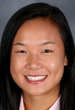 Jenny Zhang, MD
Dr. Jenny Zhang is currently in residency training at a Federally Qualified Health Center, United Family Medicine in St. Paul, Minn., serving and reminded on a daily basis of the barriers our patients and communities face when uninsured or underinsured. She brings skills from her outreach work with the nonprofit FeelGood Berkeley and the Student National Medical Association, and is passionate about outreach for PNHP Minnesota. She was previously on the PNHP-MN board as a medical student.
Media Contacts
Elizabeth Frost, MD
libbess@gmail.com
Elizabeth Frost, M.D., is a family practice doctor working at the Hennepin County Medical Center in Minneapolis, Minnesota. After graduating from residency at the University of Minnesota, Elizabeth spent almost a year volunteering with Doctors for Global Health in Chiapas, Mexico. She currently works with a heavily Latino and mostly uninsured population in Minneapolis, and is confronted daily with economic barriers to basic care. She co-founded Physicians for a National Health Program – Minnesota along with Dr. Ann Settgast.
Brian Yablon, MD
brian.yablon@gmail.com
Laurel Gamm, MD
laurelpnhp@gmail.com
Local Unions Endorsing H.R. 676
- Duluth AFL-CIO Central Labor Body, Duluth, MN
- AFSCME District Council 5, St. Paul, MN
- Minnesota AFL-CIO
- Minnesota Association of Professional Employees (MAPE)
- Southern Dakota County Labor Council, Apple Valley, MN
